
Support for toddler constipation, eczema and allergies
When the tummy or skin troubles keep coming back
As a Certified Practicing Nutritionist, I help families look at what's going on underneath, working alongside your GP, paediatrician or allergist.
★★★★★ 5.0 from Google reviews


- Certified Practicing Nutritionist (AARPN)
 SOS-trained feeding therapist
 Private health rebates may apply
Jump to: Constipation · Eczema · Food allergies & CMPA · Iron & protein · Mum & bub
"Kelly was always approachable, happy to answer our questions…"
Does any of this sound familiar?


The constipation keeps coming back, and you don't want them on laxatives forever.


The eczema flares, and you've read it might be linked to food.


You've just been told it's cow's milk protein allergy, and you're not sure what you or your baby can eat now.


You've been told their iron is low, or you're worried they're not getting enough.

You've had a quick appointment and a script, and you're still wondering what you're missing.
It's usually all connected
The gut, the skin and what goes on at the table are closely linked. A constipated child often doesn't feel like eating, a short list of foods can mean low fibre or iron, and itchy skin disrupts sleep, which makes tired kids harder to feed. That's why I look at the whole picture, alongside your doctors.
Constipation
What parents notice: Hard, painful poos, holding on, tummy aches, or going days without a poo. Sometimes it gets better with medicine, then comes back.
What I look at: Fibre and fluids, how much milk they're drinking, the foods they'll accept, toileting routines, and whether a fussy menu is part of the picture. We build changes around foods your child already eats.
Working with your doctor: I don't change or stop medication. If your child is on a laxative, we keep your GP or paediatrician in the loop about any changes.
Eczema
What parents notice: Dry, itchy, flaring skin, and a feeling that there must be more to it than creams.
What I look at: Your child's diet, gut health and key nutrients, plus any patterns you've noticed with food. Cutting foods out can make a small menu even smaller, so any changes are made carefully, with your GP, dermatologist or allergist where allergies are involved. Skin changes can take months, and I'll be upfront about timelines from the start.
Food allergies & CMPA
What parents notice: A reaction to a food, a new diagnosis like cow's milk protein allergy (CMPA), or worry about what's safe to give.
What I look at: Allergies are diagnosed by your GP, paediatrician or allergist. My role is helping you feed your child well around that diagnosis: safe swaps, enough calcium, protein and iron, and meals that still feel normal for the whole family.
If your child has a severe allergic reaction, call 000. Follow your child's ASCIA action plan if they have one.
Iron & protein
What parents notice: Tiredness, paleness or a very short list of foods, or a blood test that shows low iron or iron deficiency.
What I look at: Where iron and protein can fit into the foods your child already eats. If testing would change the plan, I'll suggest asking your GP.
Mum & bub
What parents notice: You're breastfeeding a baby with allergies or reactions, and you've been told to change your own diet.
What I look at: Your baby's reactions and your own nutrition, together. If you've been asked to remove foods like dairy while breastfeeding, I'll help you do it in a way that keeps you nourished too.

How I help: The Happy Table Approach
1Listen.
Your child's health history from pregnancy and birth, symptoms, medications and what you've already tried.
2Look underneath.
The gut, skin, allergies and nutrients, and what's happening at meal times.
3Lighten the table.
Realistic food changes built around one family meal.
4Layer in support.
Food first, then testing through your GP or other extra support if it'll change the plan.
5Keep going together.
A follow-up at two weeks, then monthly, adjusting as we go.
Search results and AI tools can list possible causes. They can't look at your child's history, see how the gut, skin and eating connect, or talk to your GP. That's the part I do.
Initial consultation $220 · Private health rebates may apply
bring all your questionsWhat to expect

- 1
Before we meet
A short questionnaire covering health history, medications and supplements (your phone will do).
- 2
First appointment
60 minutesSafety first, then the full story, body systems, diet and first steps.
- 3
Your written plan
Within 2 business days - 4
Follow-ups
40 minutesAt two weeks, then monthly. Most families have 4 to 5 appointments over about 3 months.
- 5
Your GP, paediatrician or allergist stays in the loop
With your permission, I send a report after the first appointment and whenever the plan changes.
I provide nutrition support alongside your child's medical care. I don't diagnose or replace medical advice, so please keep seeing your doctor for any medical concerns.
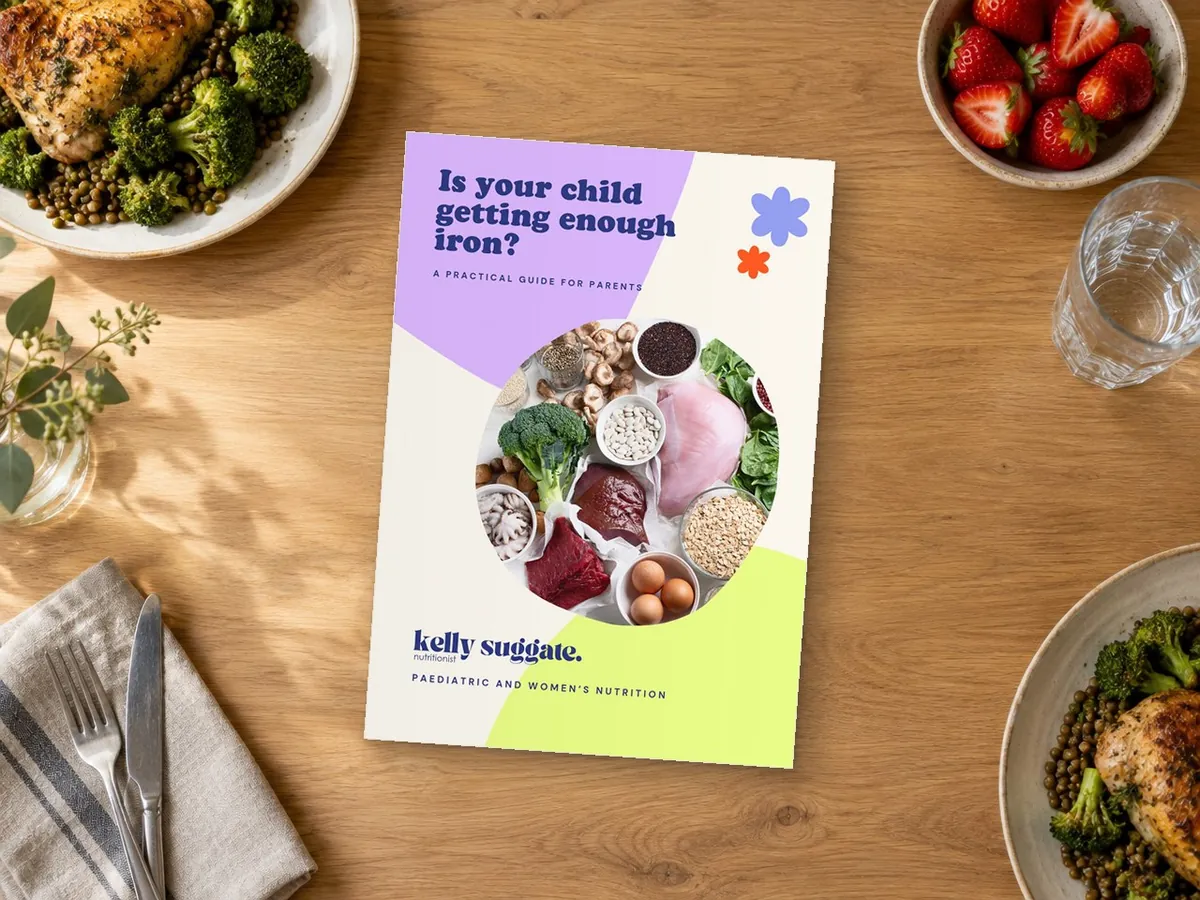
Free guide: Iron for Kids Guide
Is your child getting enough iron? This guide covers why kids need iron, how much, signs of deficiency, and how to optimise iron through food.

Questions parents ask, usually after a long day
When should I worry about my toddler's constipation?
See your GP if it keeps coming back or isn't settling, and see a doctor straight away if there's blood in the poo, severe tummy pain, vomiting or a swollen tummy. Constipated patches are common in toddlers, especially during toilet training or after a change in diet. Once medical causes are checked, I can help with the food and routine side.
How can I help my toddler's constipation at home?
Start with the basics: regular drinks of water through the day, fibre from fruit, vegetables, wholegrains and legumes your child already eats, not too much milk, and relaxed time on the toilet after meals. Keep going with any medicine your GP has suggested while you make changes. If it still isn't settling, I can look at the bigger picture with you, including whether a short list of foods is part of it.
Will my child need testing?
Only if it will change the plan. If a test could help, such as checking iron levels, I'll suggest it, and it goes through your GP or a private provider, whichever costs you less. I don't diagnose allergies, intolerances or medical conditions. That's for your GP, paediatrician or allergist, and I help with the food side around their diagnosis.
Which foods should toddlers with eczema avoid?
There's no one list that suits every child, and removing foods without good reason can leave little ones short on nutrients. If food is a suspected trigger, look at it with your GP or allergist, and I'll help keep your child's diet balanced.
I'm breastfeeding a baby with CMPA. Can you help me too?
Yes. If you've been advised to remove dairy or other foods while breastfeeding, I can help you plan meals that keep you well nourished, while we look at your baby's reactions and feeding together.
How long until we see a change?
Gut changes can show up within weeks, while skin often takes months. It depends on your child and the concern, and I'll give you a realistic idea at your first appointment.
Let's look at what's going on underneath.
Initial consultation $220 · Private health rebates may apply
Online Australia-wide (Mondays and Fridays) or in person at Papaya Clinic, Newtown (Tuesdays and Thursdays) · Your written plan within 2 business days

 see you at the table