
Starting solids support across Australia
Confident first foods, without the overwhelm
Starting solids in Australia comes with a lot of conflicting advice, so I'll help you start with family food and introduce allergens with confidence.
5.0 from Google reviews
 Certified Practicing Nutritionist (AARPN)
 SOS-trained feeding therapist
 Private health rebates may apply
"Kelly has been absolutely amazing!… always made the process feel so easy and reassuring. She is… supportive and genuinely cares."
Feeling a bit lost?

Everyone's giving you different advice, and you're not sure who to believe.
You're nervous about finger foods and choking.

You know allergens are important, but the thought of egg and peanut makes you anxious.

Your baby has eczema or reflux, and you're worried about how solids will go.
I've been there. When my daughter was a baby, I was told to start rice cereal, and I was nervous about everything from allergens to finger foods. It doesn't have to feel that way.
When and how to start
Australian guidance suggests starting solids at around 6 months, when your baby is showing signs they're ready (and not before 4 months).
Babies can eat what you eat, with a few tweaks to texture, salt and size. The high chair will get its share too. Starting with family food makes life easier, and iron-rich foods are a great place to start, as babies' iron needs go up around this age.
Read ASCIA's guidance on starting solids →
Signs your baby is ready

Good head and neck control
And sitting up with support.
Showing interest in food
Like watching you eat or reaching for your plate.

Opening their mouth
When food comes near.
Bringing things to their mouth
Being able to get food or toys there on their own.
Introducing allergens to your baby, the ASCIA way
ASCIA recommends introducing common allergy-causing foods in the first year once your baby has started solids, and then keeping them in the diet regularly. This includes cow's milk, eggs, tree nuts, peanuts, wheat, soy, fish, shellfish and sesame. There is strong evidence for the early introduction of egg and peanut as soon as your baby has started solid foods around 6 months, but not before 4 months.
I'll help you plan which foods to introduce, in what form and in what order, so it fits into the meals you're already making.
If your baby has severe eczema, an existing food allergy, or you're worried about allergies, talk to your GP before introducing allergens. If your baby has an allergic reaction, stop feeding that food and seek medical advice. For signs of a severe reaction, such as trouble breathing or swelling of the tongue or throat, call 000.
Read ASCIA's allergen introduction guide →Finger foods and gagging: what's normal
Gagging is a normal part of learning to eat. It's your baby's way of moving food forward in their mouth, and it's often noisy, with coughing, spluttering or watery eyes. It usually settles as they get more practice with different textures.
Choking is different and is an emergency. A baby who is choking is often quiet and can't cough or breathe properly.
I'll help you choose safe shapes and textures for finger foods, one meal at a time. I also recommend every parent does a baby first aid course.
Find a baby first aid course →
How I help: The Happy Table Approach for starting solids
1Listen.
Your baby's health and feeding so far, your family's meals and any worries you have.
2Look underneath.
Reflux, eczema, family history of allergies, constipation, and your baby's readiness and development.
3Lighten the table.
Family food from the start, with a simple plan for textures and finger foods.
4Layer in support.
An allergen plan that follows ASCIA guidance, plus extra support for iron or tummy troubles if needed.
5Keep going together.
A follow-up at two weeks, then monthly, as your baby moves through new foods and textures.
Search results and AI tools can hand you a first foods list. They can't see your baby's reflux, eczema or family history, or adjust the plan when week two looks different. As a Certified Practicing Nutritionist and a mum of two, I help with exactly that part.
Initial consultation $220 · Private health rebates may apply
2am questions welcomeWhat to expect
- 1
Before we meet
A short questionnaire about your baby's health, feeding and your family's meals.
- 2
First appointment
60 minutesOnline or in person, with time for all your questions, even the ones that only come up at 2am.
- 3
Your written plan
Within 2 business daysWith first food ideas and recipes.
- 4
Follow-ups
40 minutesAt two weeks, then monthly, if you'd like ongoing support.
When to book
You can book before you start, or at any point along the way. Parents often get in touch when:
- Their baby has a reaction to a food
- Constipation starts once solids begin
- Their baby starts refusing food, or won't move on from purees
- They're worried about iron
- They have a family history of allergies or eczema and want a plan
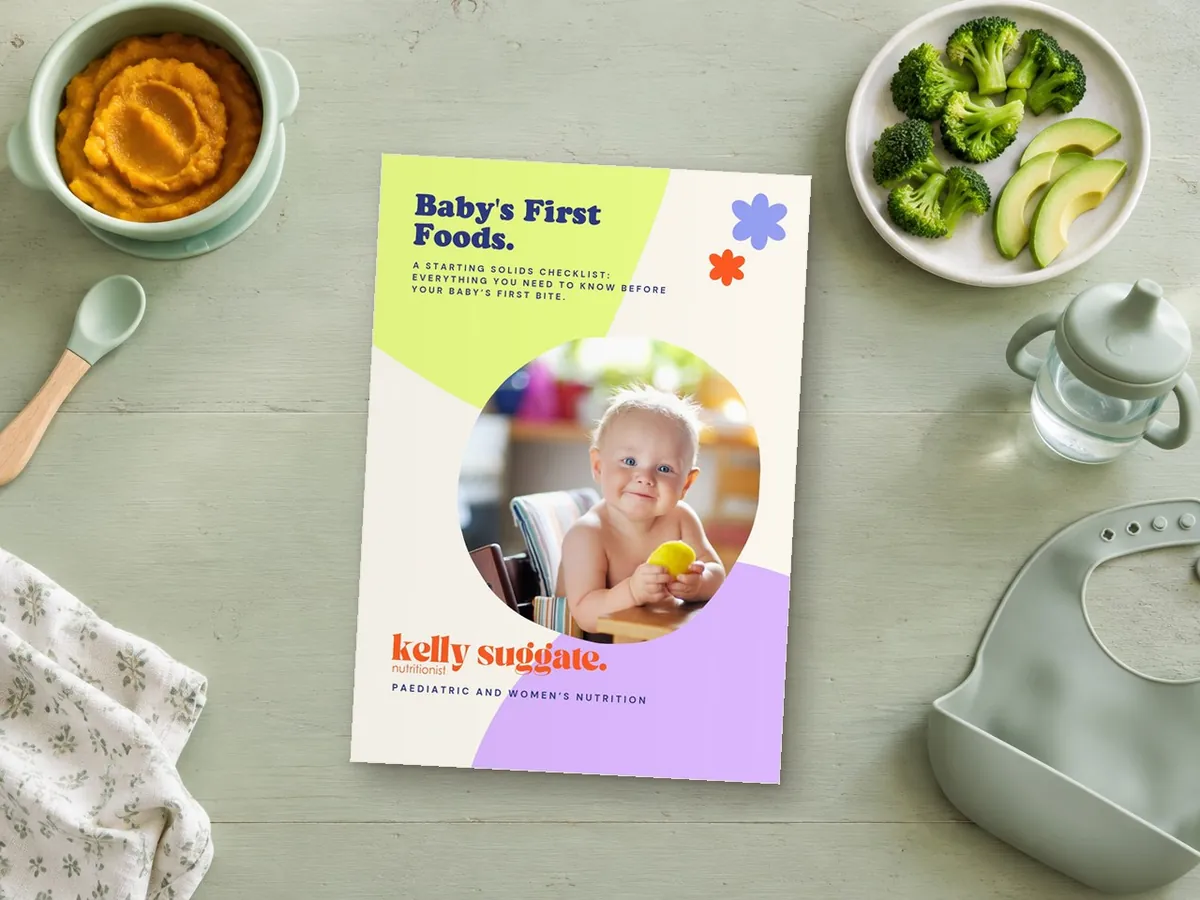
Free guide: First Foods Checklist
A starting solids checklist with everything you need to know before your baby's first bite.

Questions parents ask, usually with pumpkin in their hair
When should my baby start solids?
At around 6 months, when your baby is showing signs of readiness, and not before 4 months, in line with Australian guidance. Every baby is a little different, so watch for the signs above.
Is gagging normal when starting solids?
Yes. Gagging is a normal, often noisy part of learning to eat, and it usually settles as your baby gets more practice with textures. Choking is different: it's often quiet, and your baby can't cough or breathe properly. If your baby is choking, call 000. The finger foods section above has more on safe shapes and textures.
Which foods should my baby avoid in the first year?
Australian infant feeding guidelines suggest avoiding honey before 12 months, whole nuts and other small, hard foods that are a choking risk, added salt and sugar, and cow's milk as a main drink before 12 months (a little in cooking or with cereal is fine). Breastmilk or formula stays your baby's main drink while solids build up. The World Health Organization recommends women continue breastfeeding up to 2 years of age or beyond.
Can you help with starting solids online?
Yes. Online appointments run on Mondays and Fridays, anywhere in Australia, and they work almost exactly like in-person ones, so you can join from home around nap times. In-person appointments are at Papaya Clinic in Newtown on Tuesdays and Thursdays.
How do I introduce allergens to my baby?
ASCIA recommends introducing the common allergy-causing foods in the first year once your baby has started solids, and then keeping them in the diet regularly. This includes cow's milk, eggs, tree nuts, peanuts, wheat, soy, fish, shellfish and sesame. There is strong evidence for the early introduction of egg and peanut as soon as your baby has started solid foods around 6 months, but not before 4 months. If your baby has severe eczema or an existing allergy, talk to your GP first.
Should I do purees or baby led weaning?
Both can work, and many families do a mix. What matters most is moving through textures, including soft finger foods, over the first months. I'll help you choose what suits your baby (who will have opinions) and your family.
My baby got constipated after starting solids. Is that common?
It's a common change, as their gut gets used to new foods. Looking at fibre, fluids and the types of first foods often helps. If it's not settling or your baby seems unwell, see your GP.
Let's make first foods feel fun.
Initial consultation $220 · Private health rebates may apply
Online Australia-wide (Mondays and Fridays) or in person at Papaya Clinic, Newtown (Tuesdays and Thursdays) · Your written plan within 2 business days
 see you at the table