The short answer
It's common, as your baby's gut is learning to handle food. Fibre, fluids and a look at first foods often help. Babies under 12 months need a health check.
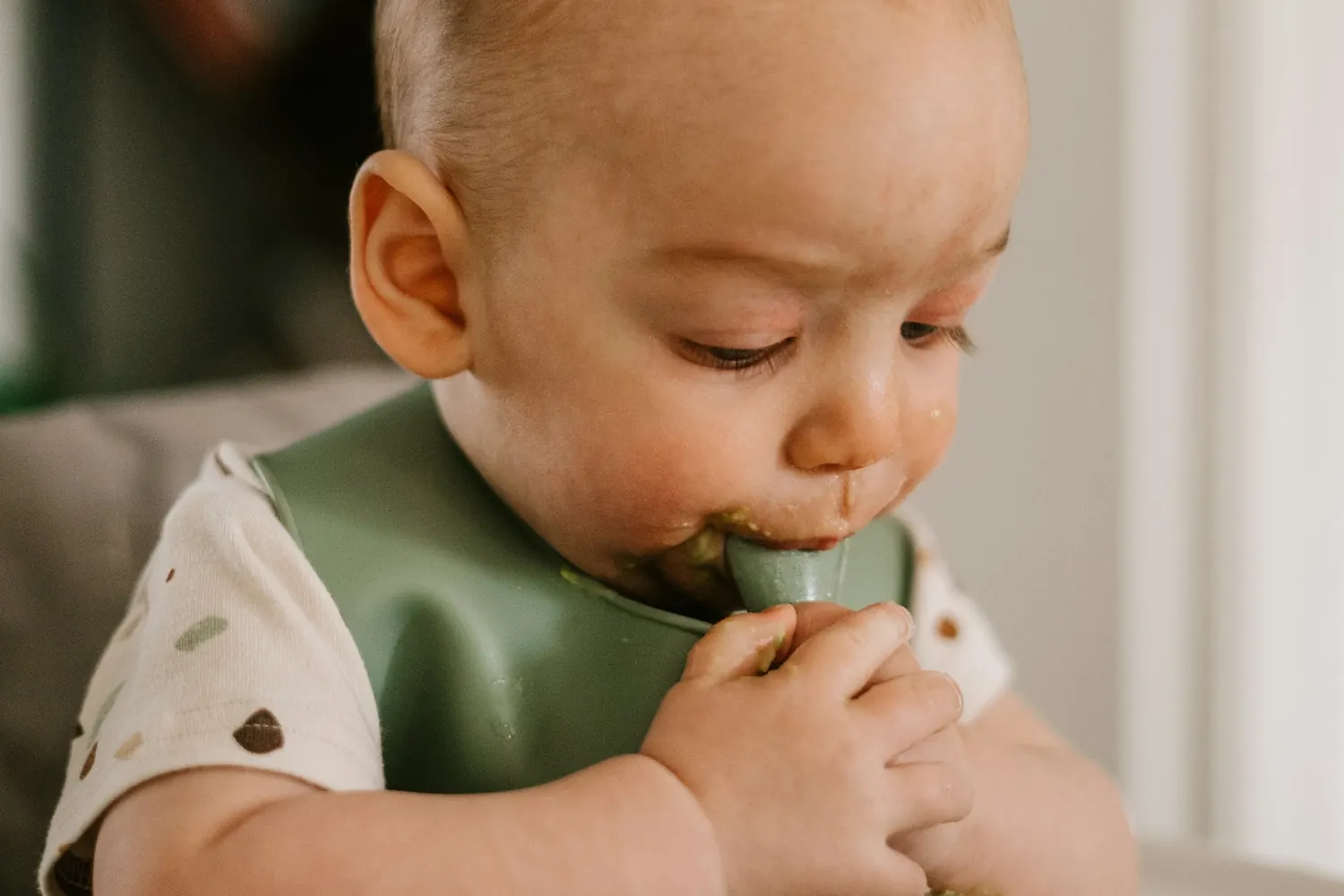
You started solids. Everyone was excited. There were photos. Then the nappies changed, and now your baby is straining, unsettled or going days between poos.
This is one of the most common worries around starting solids, and you haven't done anything wrong. Here's what's going on, what often helps, and when to get your baby checked.
Why do babies get constipated after starting solids?
Your baby's gut has spent months handling breastmilk or formula. Solids are a big change, so poos usually change too. They can become firmer, smellier and less frequent as their gut gets used to new foods.
A few things can add to it:
- Low-fibre first foods. Baby rice and other refined cereals are low in fibre. It's one of the reasons I don't recommend rice cereal as a first food.
- Less milk, not much water yet. As solids build up, some babies take in less fluid overall.
- Foods that firm things up. Banana, for example, can slow some babies down. It's still a great food, so it may only need some balance.
- Something underneath. A reaction to cow's milk protein and other medical causes can sit behind constipation, which is why a check matters if it keeps going.
Is my baby actually constipated?
How often your baby poos matters less than what the poo is like. Healthdirect says breastfed babies may poo after every feed or only once a week, while bottle-fed babies usually go at least every 1 to 3 days.
Young babies also strain and go red in the face while they learn to poo. That doesn't always mean constipation. Signs worth noticing include:
- hard, dry or pellet-like poos
- pain or crying when passing a poo
- a firm, bloated tummy
- less interest in food or milk than usual
- streaks of blood from a small tear
What helps a constipated baby on solids?
First, get it checked. Healthdirect advises that any suspected constipation in a baby under 12 months is seen by a doctor or child health nurse. Once they've had a look, these food changes are a good place to start for babies on solids.

Offer more fruit and vegetables
The Royal Children's Hospital Melbourne suggests more fruit and vegetables for babies who have started solids. Soft-cooked pear, plum, peach, apricot, broccoli and sweet potato are easy options, and they can go on the plate alongside what the rest of the family is eating.
Try prunes or apricots
The Royal Children's Hospital suggests up to three tablespoons of strained, stewed prunes or apricots, three times a week, or prune juice diluted with water. Stir the fruit through porridge or yoghurt if your baby isn't sold on it straight.
Offer sips of water with meals
Once your baby is on solids, small sips of cooled boiled water from a cup can help. Keep breastmilk or formula as their main drink through the first year.
Mix up the grains
Swap some refined cereals for oats, wholegrain breads and well-cooked legumes. Soft lentils are a great one, as they bring iron as well as fibre.
Add some movement
Tummy time, floor play and gentle bicycle legs all count. Your baby will probably think it's a game, which is a nice bonus.
Which foods make constipation worse?
No food is off limits or "bad" here. It's about the balance across the week. If your baby is constipated, take a look at how much of the day is made up of:
- baby rice and other refined cereals
- banana and apple puree
- rusks, crackers and white bread
You can keep these in the mix. Pair them with something higher in fibre, and see how your baby goes over a week or two. Change one thing at a time, so you can tell what's helping.
When should I see a doctor?
See your GP or child health nurse if your baby is under 12 months and you suspect constipation, or if they've gone a week without a poo, seem to be in pain, or things aren't improving with food changes.
Get urgent medical help if constipation comes with a fever, vomiting or blood in the poo. Call 000 in an emergency. You can also call healthdirect on 1800 022 222 for advice at any hour.
Please check with your doctor or pharmacist before using laxatives, suppositories or home remedies. Honey isn't safe for babies under 12 months, however often it comes up in online advice.
How long does constipation last after starting solids?
It often settles over a few weeks as your baby's gut adjusts and their range of foods grows. Every baby is different, so if it's dragging on, there's no need to keep waiting it out.
How I can help
When constipation keeps coming back, I look at what's underneath: what your baby eats and drinks, how they're growing, their skin, and what's going on at meal times. Then we build a realistic guide around the food your family already eats, working alongside your GP or paediatrician.
You can read more about starting solids support, or see how I help with gut, skin and allergies. If you'd like to talk it through first, book a free 15-minute intro call.
Sources
Questions parents ask
Can starting solids cause constipation?
Yes. It's a common change as your baby's gut adjusts to new foods, and low-fibre first foods can add to it.
Which fruit helps a constipated baby?
Prunes, pears, plums, peaches and apricots are common choices. Check with your doctor or child health nurse first if your baby is under 12 months and you suspect constipation.
Can I give my baby water for constipation?
Once your baby is on solids, small sips of cooled boiled water with meals can help. Breastmilk or formula stays their main drink in the first year.
About the author
Kelly Suggate is a Certified Practicing Nutritionist (AARPN) and SOS-trained feeding therapist in Sydney. She has two university nutrition degrees and helps families of babies, toddlers and young kids with fussy eating, gut and skin worries, allergies and starting solids. She's also a mum of two, so her advice has to work on a busy Tuesday night.
More about Kelly →The information on this website is general in nature and is for education only. It isn't a substitute for individual medical or health advice, diagnosis or treatment. Every child is different, so please speak with your GP, paediatrician or health professional about your child's health, and seek medical help straight away if you're worried about a reaction or your child's wellbeing. Kelly Suggate is a Certified Practicing Nutritionist and works alongside your child's medical team.